The Black Friday-Cyber Monday (BFCM) blitz has generated more inboxes, texts, ads, and site banners than ever. With shoppers flooded from all sides, brands that succeed in BFCM 2025 will be those who execute omnichannel, not just email-first.
The DeadlineFunnel guide delivers 20 actionable, omnichannel campaign examples for email, SMS, social, on-site, and paid ads. These are real Black Friday-Cyber Monday campaigns you can learn from.
We’ll cover:
Building hype (early bird access)
Peak-day urgency (main event)
Cyber Monday or last-chance push (extension)
Brand-first or anti-sale plays (differentiators)
Category 1: The early bird (Building hype & VIP access)
Nearly 40% of consumers beginholiday shopping in early November, long before Thanksgiving. That shift has reshaped the Black Friday timeline. The season now starts the moment Halloween ends.
In recent years, we’ve seen a surge of password-protected, invite-only, and time-locked sales, designed to capture high-intent buyers before the rush. These early campaigns share one goal: convert anticipation into owned attention.
Brands use early-bird access differently depending on the audience.
Existing customers often receive private codes or membership-only links by email or SMS.
New visitors encounter teaser banners or gated sign-ups that trade early entry for a verified email address.
This early-access layer builds lists, segments audiences, and drives first-mover momentum weeks before competitors launch their first discount.
The following five early-bird BFCM campaigns show how timely initiatives transform quiet periods into controlled audience growth.
Example 1: Huda Beauty – VIP list & countdown teaser
Source: hudabeauty.com
The campaign:
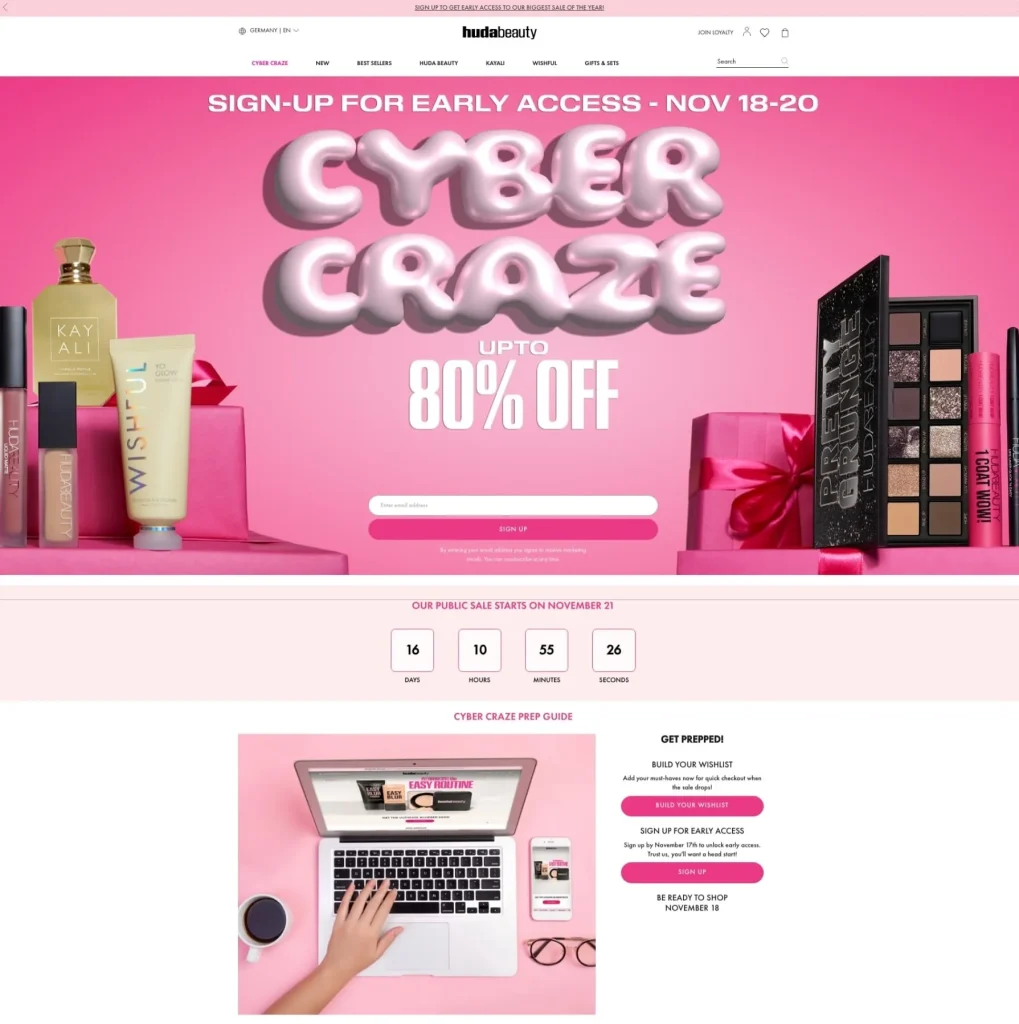
Huda Beauty used its “Huda’s VIPs” loyalty tier to promote up to 80% off for 48 hours and invited users to sign up for early entry before the public launch.
A countdown timer on the landing page and follow-up emails guided subscribers to the sale.
Converts high-intent browsers into owned contacts.
Countdown visuals anchor anticipation and lift CTR on reminder emails.
“Up to 80% off” messaging sets expectations early and drives urgency without spamming multiple codes.
The omnichannel takeaway:
Replicate the early-access message for your homepage banner, paid social (to drive list sign-ups), email follow-up, and SMS reminder. The same value proposition (VIP access + large discount) must appear consistently in all channels.
Consistent visuals tie awareness from social scrolls to inbox clicks, which reduces the drop-off between curiosity and checkout.
Example 2: Tatcha – Early access code + mystery gifts
Image source: beautyadventcalendar.net
The campaign:
Tatcha launched its early-access sale via a unique promo code distributed through People.com and email. The offer unlocked 25% off site-wide, plus mystery gift tiers at $100 and $200 spend levels.
Subscribers also received SMS reminders and a website pop-up that reinforced the limited early entry time before the public launch.
Channel(s): Editorial media partnership, email, SMS (via code-sharing), website pop-up
Why it works:
The campaign layered emotional and financial value without relying only on discount depth.
The “mystery gift” mechanic raised average order value (AOV) by incentivizing higher spend while preserving Tatcha’s luxury positioning.
By giving People.com readers first access, Tatcha tapped into an earned-media audience that already trusted the source, positioning the brand as aspirational, not transactional.
The omnichannel takeaway:
Treat your media placement as the campaign’s first touchpoint and your email/SMS automation as the second.
The value lies in how fast you retarget those who saw the article but didn’t convert. Re-use the same creative across channels within 24 hours to transform passive awareness into measurable traffic.
Example 3: Walmart – Multi-event rollout with Walmart+ early access
Image source: pennlive.com
The campaign:
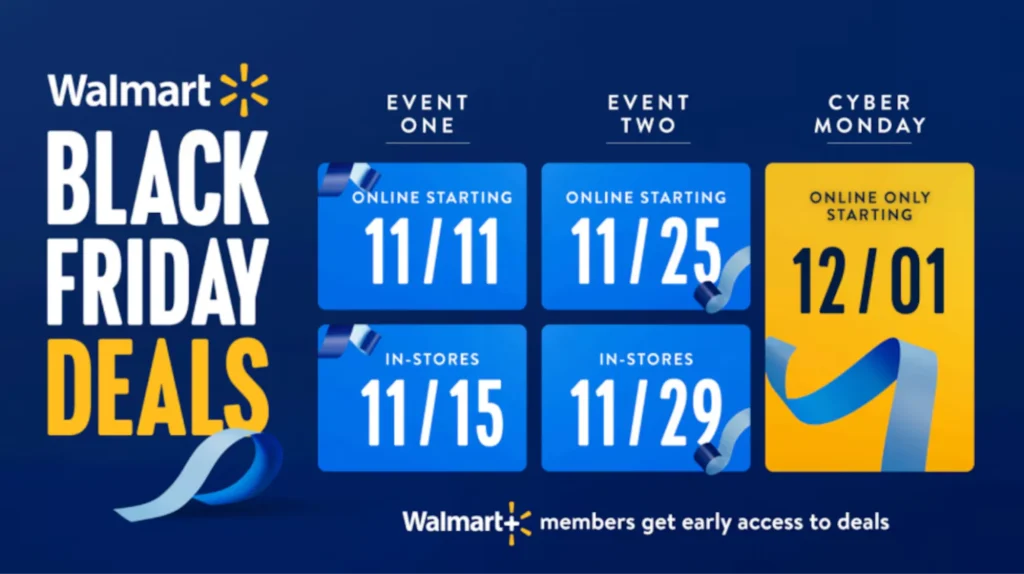
Walmart structured its 2024 BFCM as a series of three events rather than one weekend blast.
Event 1: By Nov 15.
Event 2: Began online Nov 25 @ 5 p.m. ET (in-store Nov 29 @ 6 a.m.). Walmart+ members accessed deals five hours early on Nov 25th (noon ET).
Event 3 (Cyber Monday): Continued access for Walmart+ members, which was a new perk that extended the exclusivity loop.
The staged rollout created controlled traffic waves and allowed Walmart to promote its half-price Walmart+ membership ($49 for 12 months) as a gateway to the early window. The program featured discounts up to 70% on core electronics.
Channel(s): Email, homepage hub, app push, paid social retargeting, affiliate press coverage (PennLive, CNN Underscored, USA Today Shopping)
Why it works:
Predictable cadence reduces chaos. Shoppers know exactly when each wave opens.
Membership upsell built in. The half-price Walmart+ offer turns early access into a direct-response lead gen tactic.
Earned + owned synergy. Press sites amplify urgency while Walmart maintains final conversion inside its ecosystem.
The omnichannel takeaway:
Plan Black Friday like a launch calendar, not a 24-hour sprint. Use each wave (Preview → Main → Cyber Monday) to test creative, train pixels, and refine ad audiences.
Example 4: The Oodie – Early access sweepstakes & spend-to-enter promotion
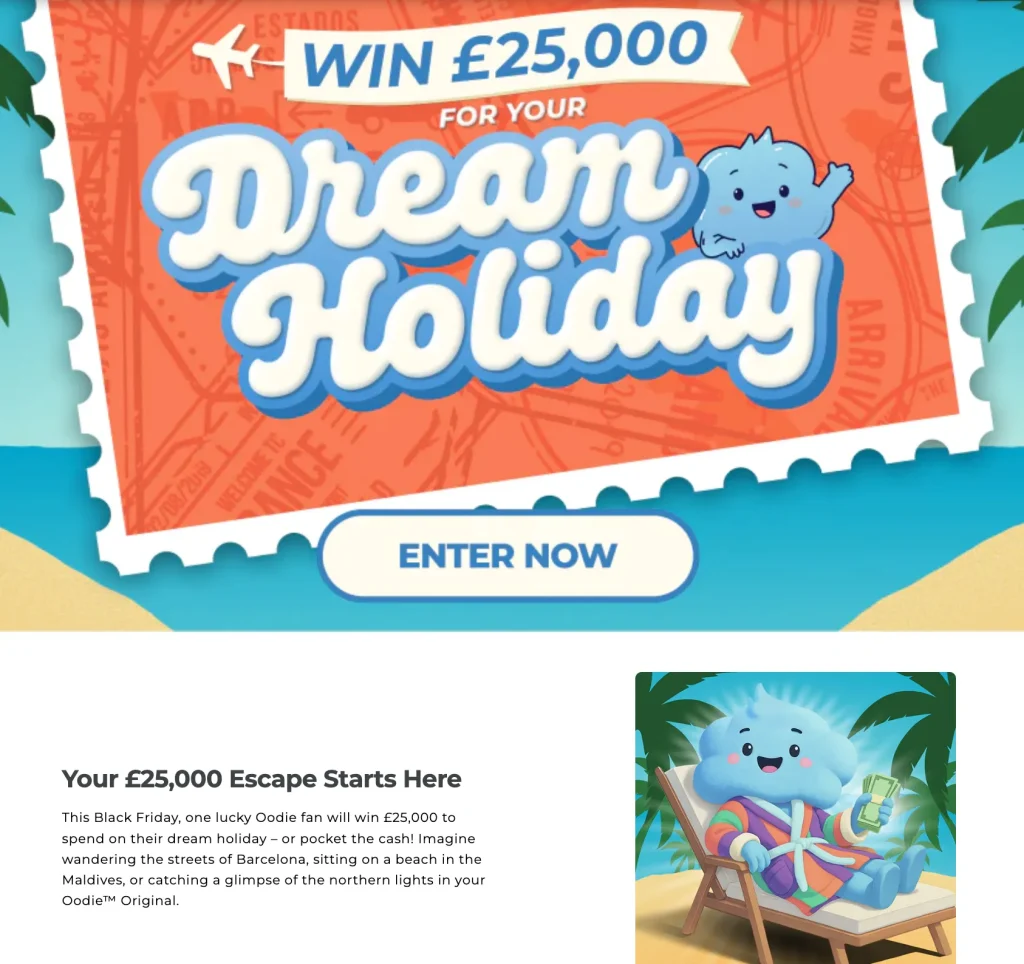
The Campaign: The Oodie launched an early Black Friday campaign starting October 1, with a chance to win £25,000 by spending and signing up for email/SMS.
Sweepstakes create excitement and early engagement long before Black Friday weekend.
Spend-to-enter ties purchase behavior to entry that captures both high intent and data.
Multi-channel opt-in (email + SMS) builds the omnichannel base ahead of the sale.
The omnichannel takeaway:
Don’t wait until the week of. Run a giveaway via email and SMS, promote it on social and site banners, then use the new leads for segmented offers when your main sale launches.
Example 5: Merit Beauty – Controlled early access through editorial partnership with exclusive code
The campaign:
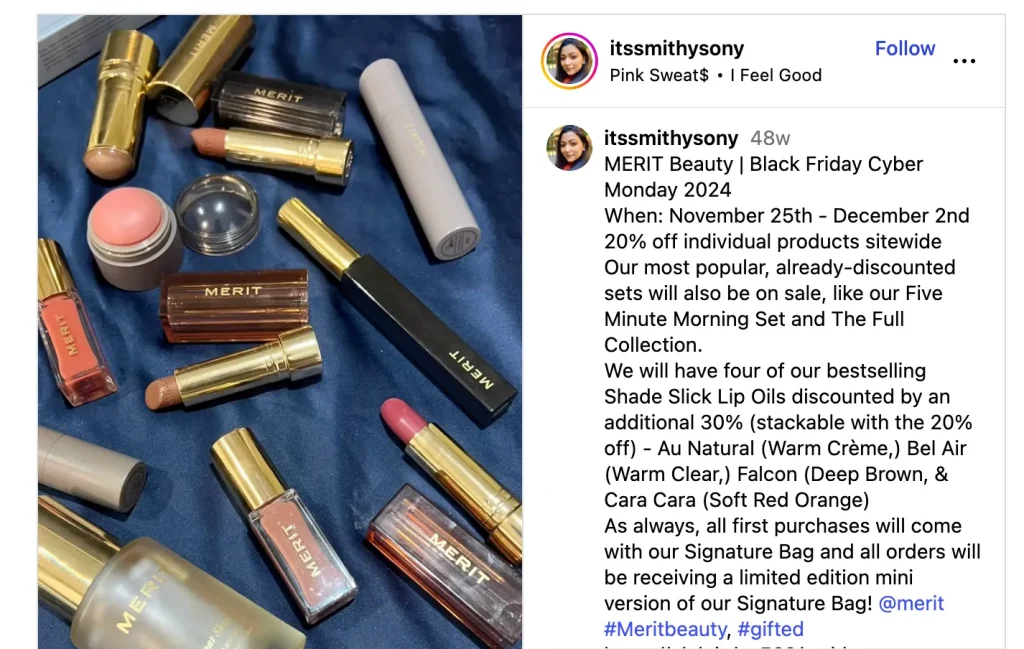
Merit Beauty began its 2024 Black Friday promotion (‘Merit’s only sale of the year’) on November 24, one day before the public sale window. The brand partnered with Vogue to distribute an exclusive early-access code (EAVOGUE) that unlocked 20% off site-wide.
The public sale ran from November 25 to December 2, and additional incentives included a free Signature Bag on all orders and a bonus Flush Balm gift on purchases above $100.
Channel(s): Email, editorial media partnership (Vogue Shopping), website header, SMS, and Instagram announcement
Why it works:
Editorial credibility replaces paid reach. By launching through Vogue, Merit embedded its discount in a trusted media context instead of standard ad inventory.
Early-access timing segments high-intent customers. One-day exclusivity identifies repeat buyers before the main traffic surge.
Add-on gifting sustains engagement. The rolling incentive (free bag, then bonus item) keeps the offer dynamic throughout the week without re-sending new discount codes.
The omnichannel takeaway:
When using early access, connect earned and owned channels under a single tracking framework.
The editorial article, the email CTA, and the on-site banner should point to identical URLs with campaign-level UTM tags. It creates one continuous funnel and avoids data fragmentation between press coverage and in-house campaigns.
Category 2: The main event (Peak-day urgency & offers)
Black Friday isn’t a shopping day but a traffic surge measured in seconds. Every channel fires at once, and clarity decides who wins.
The best Black Friday campaigns make the offer visible before the scroll, repeat the same message across channels, and add motion through countdowns, bundle logic, or visible inventory drops.
The next seven examples show how leading brands sustained momentum during the 48-hour BFCM peak without burning out their audiences.
The campaign was funnier than typical ads and increased purchase intent above the industry average.
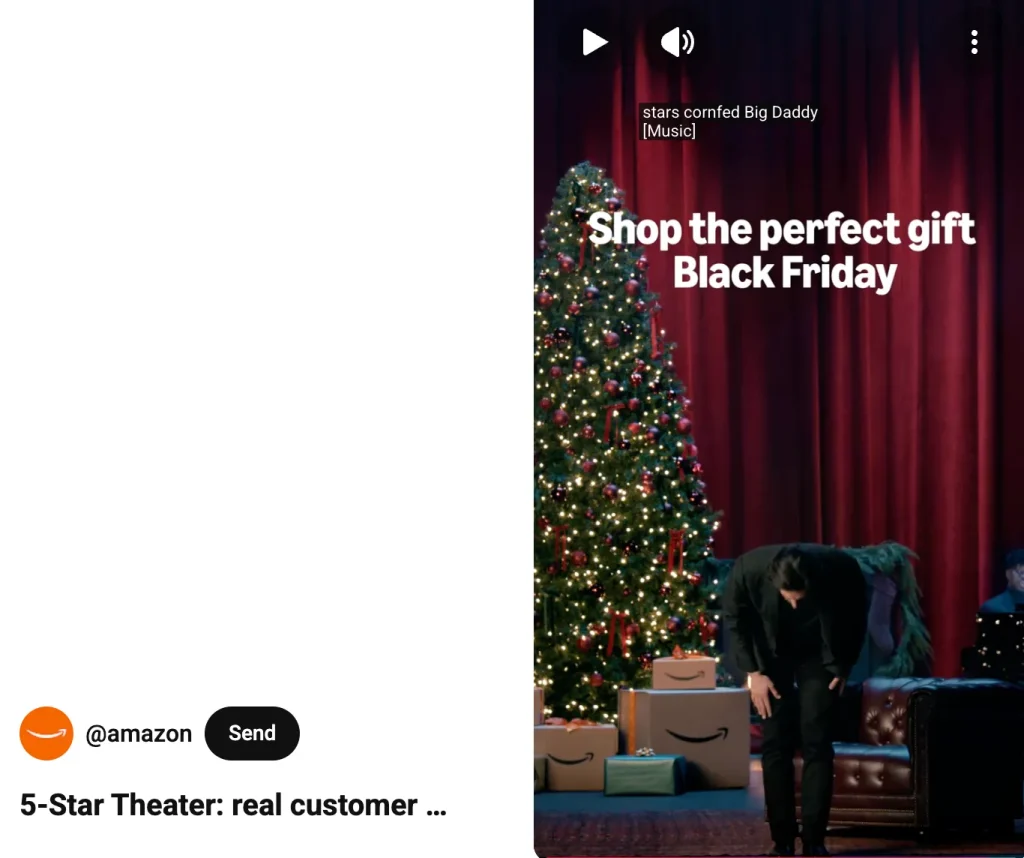
Example 6: Amazon – “Five star theater” entertainment campaign
The campaign:
For Black Friday 2024, Amazon produced video content featuring actor Adam Driver that delivered theatrical performances based on authentic customer reviews.
These “Five star theater” entertaining clips were distributed on television, YouTube, and TikTok, transforming routine product commentary into memorable entertainment.
The campaign earned 330 million impressions and received 99% positive sentiment. It was funnier than typical ads and increased purchase intent above the industry average.
Channel(s): TV, YouTube, TikTok, website
Why it works:
Humor provides relief from repetitive promotional messaging.
Customer reviews supply authentic content while celebrity involvement adds production value.
An entertainment format increases sharing and remembrance.
The omnichannel takeaway:
Entertainment-driven campaigns need consistent creative across channels. If you use humor or storytelling in your Black Friday ads, carry the same tone into your emails and website copy.
Add urgency without breaking the creative concept. For example, display a countdown with playful copy that matches your campaign voice: “The reviews are in: this sale ends in [timer].”
Example 7: Miracle Brand – “Better than their deals” positioning
The campaign:
Miracle Brand used a clever Black Friday email with the subject line “👆 Better than their deals 👇” to position their offer as superior to competitors.
The email featured a clean design, straightforward copy about bundle deals, and included Instagram cross-promotion with user-generated content to build credibility.
Channel(s): Email, Instagram
Why it works:
Directly addresses the competitive nature of Black Friday and positions the brand as the best choice.
User-generated content (UGC) provides social proof and makes the offer feel more trustworthy.
Clean design helps the message cut through the visual noise of Black Friday.
The omnichannel takeaway:
Competitive positioning works when it’s consistent across channels. Feature the same “best deal” angle in your paid ads, social posts, and website banners.
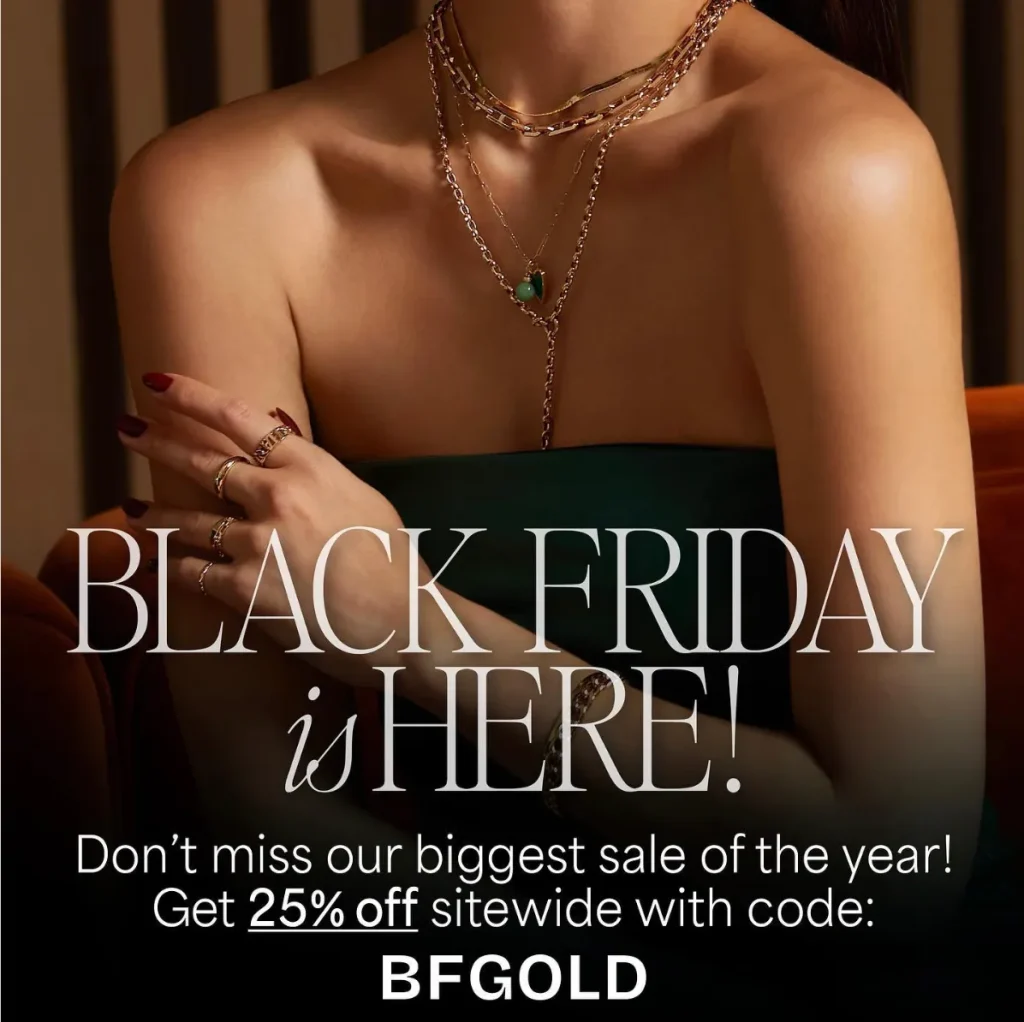
Example 8: Babygold – Tiered channel discounts
Image source: instagram.com
The campaign:
Jewelry maker Babygold offered different discount levels across channels during Black Friday. Social media followers received 25% savings. Email subscribers accessed 35% off. This hierarchy clearly communicated where customers should engage for maximum value.
Channel(s): Email, Instagram, website
Why it works:
Differential pricing rewards your most valuable channel without excluding others completely.
Explicit hierarchy teaches customers where to find your best offers,
Strategic difference encourages social followers to join email lists.
The omnichannel takeaway:
Use strategic discount variations to drive desired behaviors. Promote your strongest offer exclusively to email subscribers with messaging that email subscribers always receive superior access.
On social platforms, promote the secondary offer while noting that email subscribers get an additional 10% off.
Assign email subscribers longer access windows (72 hours) than social followers (48 hours), reinforcing channel value through both pricing and time.
Example 9: reMarkable – “Black Friday is ending” live-timer email
Image source: reallygoodemails.com
The campaign:
ReMarkable’s Black Friday email opened with a bold hero line, “Black Friday is ending.” Beneath that sat a live countdown timer (hours: minutes: seconds) and a fixed-amount discount (-$50) on their digital paper tablet.
Channel(s): Email primary; on-site banner echoed the same message; press/industry coverage captured the design.
Why it works:
A real-life timer drives visual urgency far more tangibly than “ends soon” copy.
Fixed dollar discount (-$50) on a premium item anchors value more clearly than a vague percentage.
Clean, minimal design aligns with brand identity and reduces distraction from the conversion path.
The omnichannel takeaway:
Don’t treat the timer as an email gimmick. Replicate the same clock in your hero banner and optionally on a mobile push or on-site header so every channel tracks the same deadline.
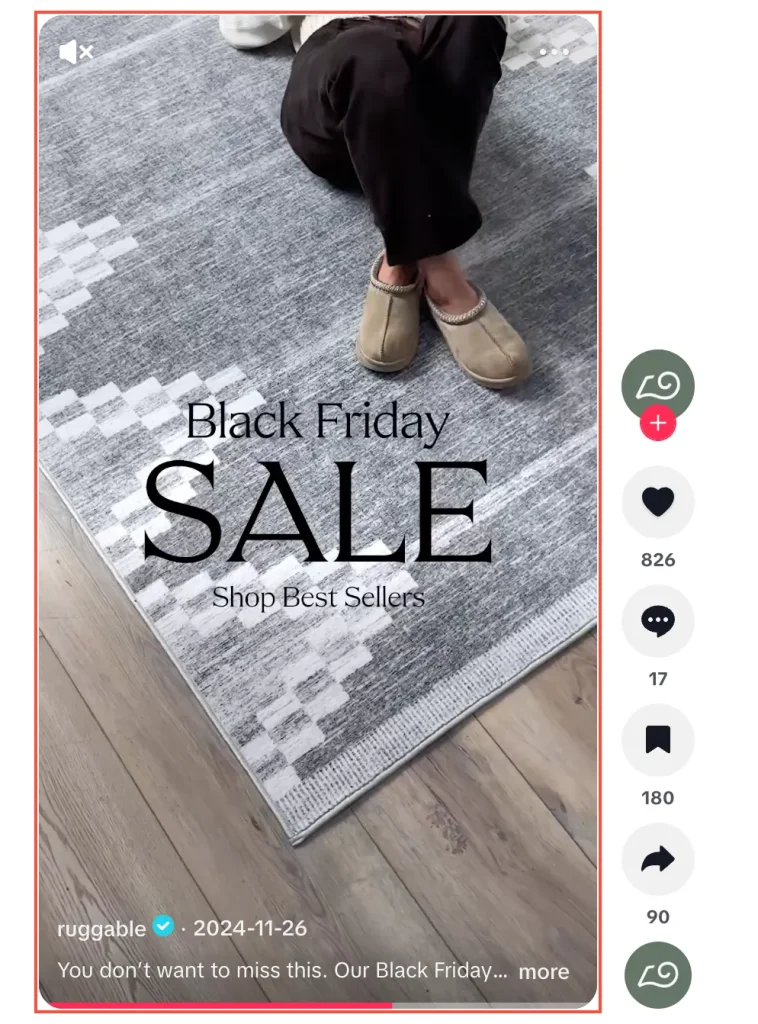
Example 10: Ruggable – Product visualization
Image source: tiktok.com
The campaign:
Rug manufacturer Ruggable created TikTok videos for Black Friday 2024, which showed various versions of their products, including their products in actual home environments with attractive styling.
Short text overlays announced discounts.
These TikTok and Instagram videos have collected thousands of likes and saves from viewers.
Channel(s): TikTok, Instagram
Why it works:
Contextual product display helps customers imagine items in their own spaces.
Vertical video format matches platform specifications for mobile viewing.
Saved content indicates purchase consideration that exceeds passive scrolling.
The omnichannel takeaway:
Produce short vertical videos showing your products in realistic use situations for TikTok and Instagram Reels. Include text overlays with your discount information and verbal direction to your profile link.
When visitors click to your website from these videos, immediately display a countdown that shows the sale duration to maintain urgency from discovery through consideration.
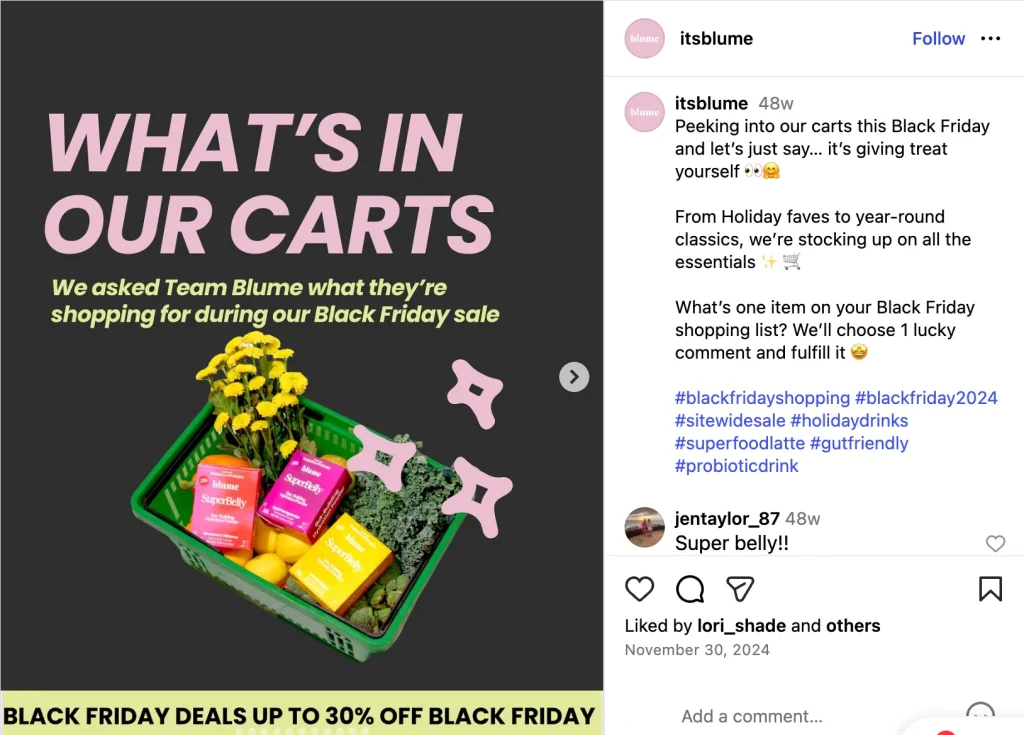
Wellness brand It’s Blume featured their own employees in Black Friday 2024 Instagram content. Team members appeared in carousel posts sharing their personal favorite It’s Blume products with explanations of why those items mattered to them.
Channel(s): Instagram, email
Why it works:
Employee endorsements provide credible social proof from product experts
Personal stories humanize the brand during commercial periods
Staff picks help uncertain shoppers make decisions
The omnichannel takeaway:
Create a dedicated collection on your website featuring the exact items your team highlighted on social media. Send an email featuring these staff selections with direct links to that collection page.
Implement Deadline Funnel to add time pressure: “Staff favorites at sale prices until [countdown].” Display that same countdown on the collection landing page for consistency across channels.
Example 12: Casper – Humor-driven “sleep through Black Friday” countdown concept
Casper flipped the typical countdown tactic into a playful narrative that still revolved around time.
The brand sent a two-part Black Friday sequence built around an alarm clock, a metaphorical countdown, that invited subscribers to “turn off alarms” and shop from bed.
The Casper campaign offered $75 off mattresses and other sleep products, and followed up the next day with a “You slept through Black Friday?” reminder email, which extended the deal with the same tone.
Image source: reallygoodemails.com
Why it works:
Instead of showing a digital timer, Casper used humor and relatable timing triggers (alarm clocks, early wake-ups) to make time pressure feel natural and brand-aligned.
Both emails shared an identical structure, colors, and humor style. The concept persisted visually and emotionally.
High-intent users still felt the ticking pressure, but through storytelling rather than anxiety, which is perfect for a comfort-focused brand.
The omnichannel takeaway:
Build a campaign that links emotion or routine (sleep, coffee breaks, workouts) to your offer timeline so customers experience urgency through storytelling.
Use one creative thread across email, SMS, and paid social (for example, a “race against the clock” or “lazy shopper” concept) and keep the same tone and visuals on your landing page.
Category 3: The extension (Cyber Monday & last chance)
Cyber Monday extensions and last-chance pushes convert indecisive traffic after Black Friday.
The weekend between Black Friday and Cyber Monday tests whether brands can sustain momentum without exhausting their audience.
Example 13: Altitude Sports – Countdown Cyber Monday finale
The campaign:
Altitude Sports ran a same-day Cyber Monday email with “Up to 40 % off” and a live countdown timer anchored in the hero section. The message emphasized that “many deals are disappearing tonight,” which gives the sale a hard stop.
The layout stacked high-value outdoor brands (UGG, Fjällraven, Black Diamond) with their discount percentages and repeated “ending today” copy blocks down the scroll. It also offered a special, doubled membership discount.
The creative applies time pressure without chaos. The monotone green gradient ties visual continuity between email and on-site banners.
Listing recognizable brands with their discount caps builds instant trust.
The live timer transforms a standard “sale” into an event.
The omnichannel takeaway:
Use one countdown source across all channels (email header, homepage bar, and cart page) so urgency stays synchronized.
Mirror Altitude’s method by pairing a clean product list with a live timer and a plain-language closer (“deals disappear tonight”). When every touchpoint shares the same expiry moment, you remove doubt and drive final-hour action.
Example 14: Shinola – Data-driven flows + spend-more, save-more campaign
The campaign:
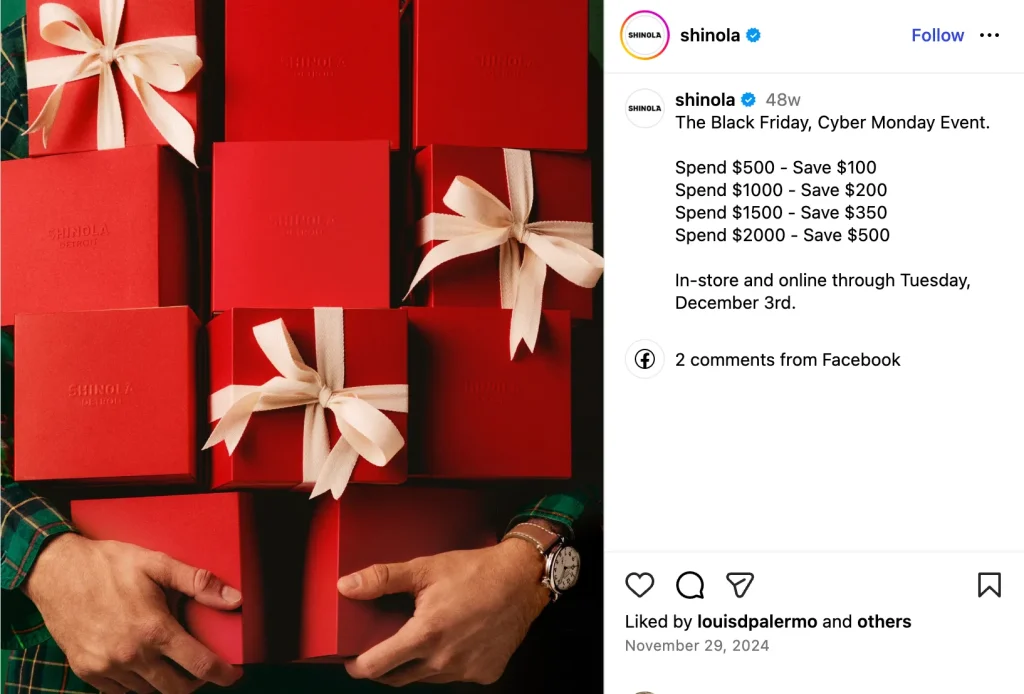
Watch and leather goods brand Shinola implemented its first comprehensive BFCM campaign in 2024 using customer segmentation, optimized automated sequences, and targeted messaging for engaged audiences.
The promotional layer was a spend-more, save-more offer: “Spend $500 Save $100 … Spend $2000 Save $500”.
It was publicly shared on Shinola’s Instagram and used in email and SMS to reinforce tiered incentives. It gave a deadline – Tuesday, December 3rd.
The brand built segmented Klaviyo flows and SMS automations, generating 27% YoY growth in total BFCM revenue, 48% higher revenue per recipient, and 40% more revenue from automation. (Source: Shinola Case Study).
Automation captures revenue without constant manual intervention.
The spend-tier structure scaled the average order value without eroding margin.
The omnichannel takeaway:
Build automated sequences for specific Cyber Weekend behaviors: abandoned shopping carts, product browsing without purchase, post-purchase thank you, and complementary product suggestions.
Each sequence should include behavior-appropriate deadlines. Cart abandonment on Saturday triggers a four-hour completion deadline. Friday purchases trigger a 24-hour cross-sell deadline. Individual deadlines increase authenticity.
Example 15: Duluth Trading Co. – Cyber Week engagement + social proof hook
Image source: reallygoodemails.com
The campaign:
Duluth Trading Co. extended its BFCM offer into Cyber Week 2024 with a bold creative headlined “AMP IT UP! 50% OFF Sitewide.”
The design used an illustrated hero, animated characters, and red-dominant contrast to stand out in inboxes flooded with neutral minimalist designs.
A live metric, “55,825 People Are Shopping Right Now!” introduced real-time social proof, while a persistent top banner offered free shipping until Dec 4.
Channel(s): Email → website banner + cart page
Why it works:
The social-proof line quantifies urgency. Showing concurrent shoppers adds credibility and reinforces the FOMO (fear of missing out).
The bright color palette breaks the “Cyber Monday sameness” of black-and-gray visuals and keeps attention longer in crowded inboxes.
The omnichannel takeaway:
Fuse urgency with social proof as a metric. If your platform supports live-visitor or “items in cart now” counters, echo them across channels: email header, landing page, and checkout.
Combine that data cue with a firm expiration (e.g., “Ends 12/4”) to create simultaneous emotional and temporal pressure. Embed a real-time counter beside your countdown timer for a hybrid urgency display.
Example 16: Ninja Kitchen – Last-Chance Cyber Week Closeout
Image source: emailinspire.com
The campaign:
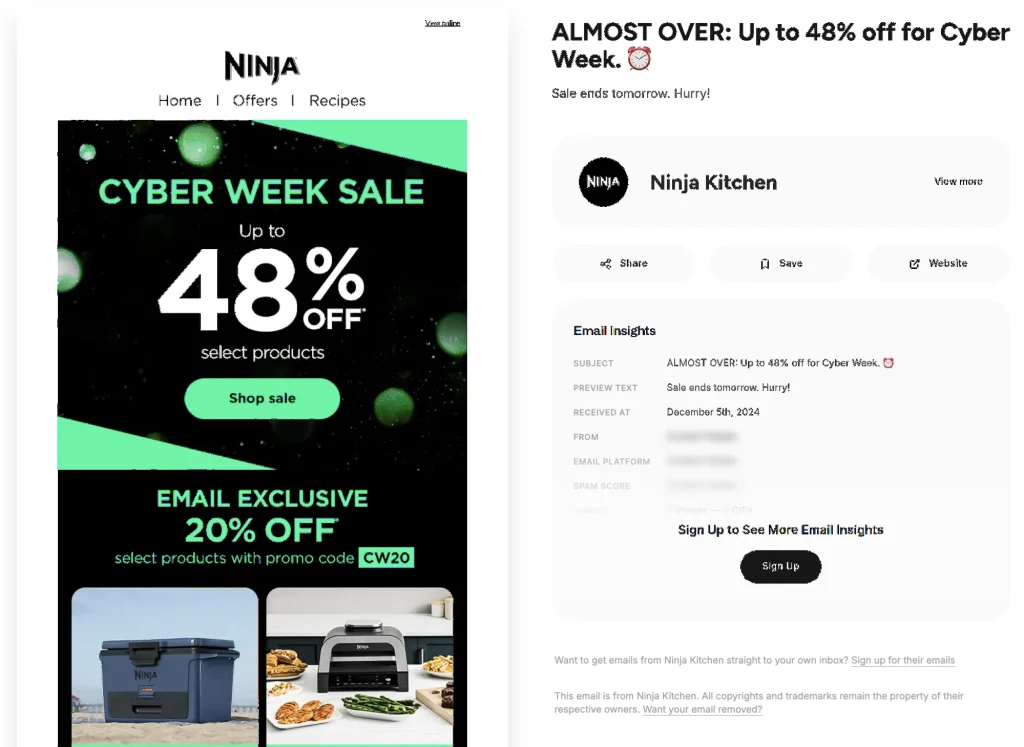
Ninja Kitchen sent a Cyber Week finale email on December 5th, 2024, with the subject line “ALMOST OVER: Up to 48 % off for Cyber Week ⏰.” This campaign closed Cyber Week with precision.
The hero banner displayed a neon-green gradient and a clear offer: Up to 48 % off select products + an email-exclusive 20% code (CW20). The CTA “Shop Sale” linked to a landing page with a countdown banner.
The subject line creates instant urgency, and the two-tier offer rewards email subscribers without confusing the main audience.
Anchoring the deadline to “tomorrow” adds authentic time pressure instead of evergreen scarcity.
The omnichannel takeaway:
Run a Cyber Week closeout as a one-day “email-first” push with a bonus code and shared countdown across email and website headers.
When the offer expires, follow with a post-sale recap email that shows top sellers to retain engagement through December.
Example 17: Lulus – One-night-only SMS countdown
Image source: omnisend.com
Lulus closed its Cyber Monday window with a short, direct SMS campaign focused on final-hour conversions.
The message read: “Black Friday Sale ends TONIGHT! Don’t miss out on 20–75 % OFF E-V-E-R-Y-T-H-I-N-G! Use code BF20.”
The text went out to existing subscribers in the late afternoon and matched the copy displayed in the homepage banner and social stories.
Instead of using new creative, Lulus reused its existing assets and updated only the deadline. This allowed the team to stay top-of-mind without re-sending multiple emails or redesigning creatives, which is an efficient approach for the final 12 hours of a sale.
Channel(s): SMS → Website landing page
Why it works:
The single-sentence format keeps attention on the sale, discount, and deadline.
The mirrored timing eliminates inconsistencies that often occur when brands run separate end-of-sale reminders in channels.
Simple structure focuses on discount + deadline, which minimizes decision friction.
The omnichannel takeaway:
Use a short, mobile-first message when closing a sale window. Send your final SMS call-out during evening hours to target high mobile engagement periods and last-minute buyers.
Mirror key formatting (caps, spacing) and ensure your visible deadline is consistent across all channels to reinforce one unified endpoint.
Category 4: The “anti-sale” & brand-first plays
Some brands differentiate by rejecting traditional BFCM discount approaches.
Example 18: Tentree – Environmental impact
Image source: shopcircle.co
The campaign:
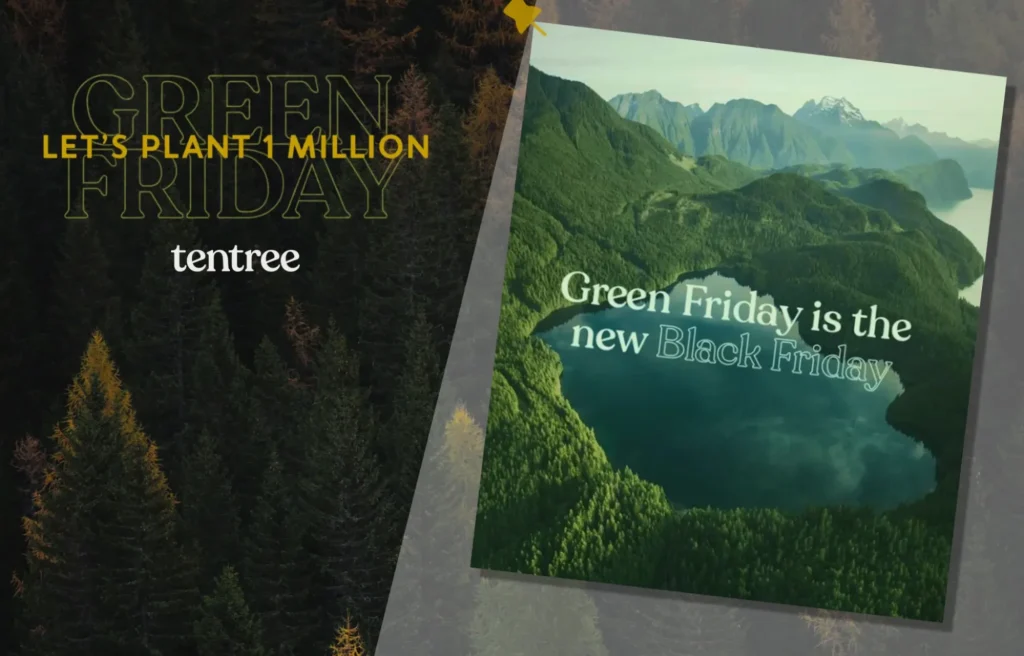
Apparel brand Tentree renamed Black Friday 2024 as “Green Friday” with a million-tree planting goal. Each purchase funded the planting of 10 trees. Customers received tracking codes showing their trees’ specific locations.
The Tentree Green Friday campaign combined an environmental mission with conventional sale elements, including sitewide discounts, complimentary shipping, and early access for loyal customers.
Channel(s): Email, website, social media
Why it works:
Mission alignment resonates with an environmentally conscious customer base.
Tree tracking makes abstract impact concrete and personal.
Combines purpose with practical sale components rather than pure anti-discount positioning.
The omnichannel takeaway:
Make environmental or social impact visible in all channels when running purpose-driven promotions. Email subject: “Your purchase plants 10 trees.” Website banner: “X trees planted today [live counter].” Social posts: “X trees planted thanks to customers.” Post-deadline, publish the total impact the campaign achieved.
Example 19 – IKEA – #BuyBackFriday circular return program
Image source: squarespace.com
The campaign:
IKEA launched the #BuyBackFriday campaign. The program invited customers to return used non-upholstered furniture in exchange for vouchers. The campaign redirected attention from discounting to circular consumption.
The message reframes Black Friday into a reuse event, which strengthens brand consistency.
The voucher incentive offers value without cutting margins.
The initiative appeals to environmentally conscious customers who prefer sustainable options.
The omnichannel takeaway:
Brands that promote sustainability should display clear return and voucher information across every channel. The communication must match on email, website, and in-store signage to maintain clarity at each step of the buyer journey.
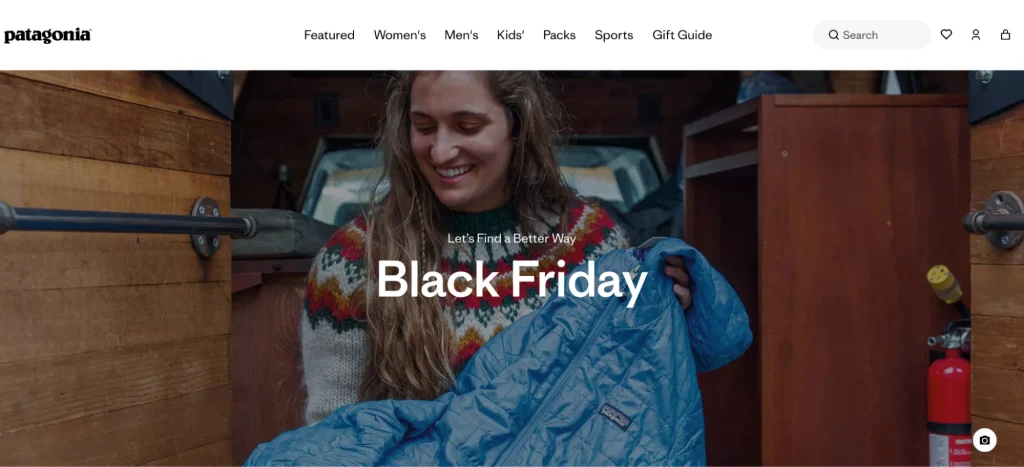
Example 20: Patagonia – The “don’t buy this jacket” anti-consumerism stance
Image source: patagonia.com
The campaign:
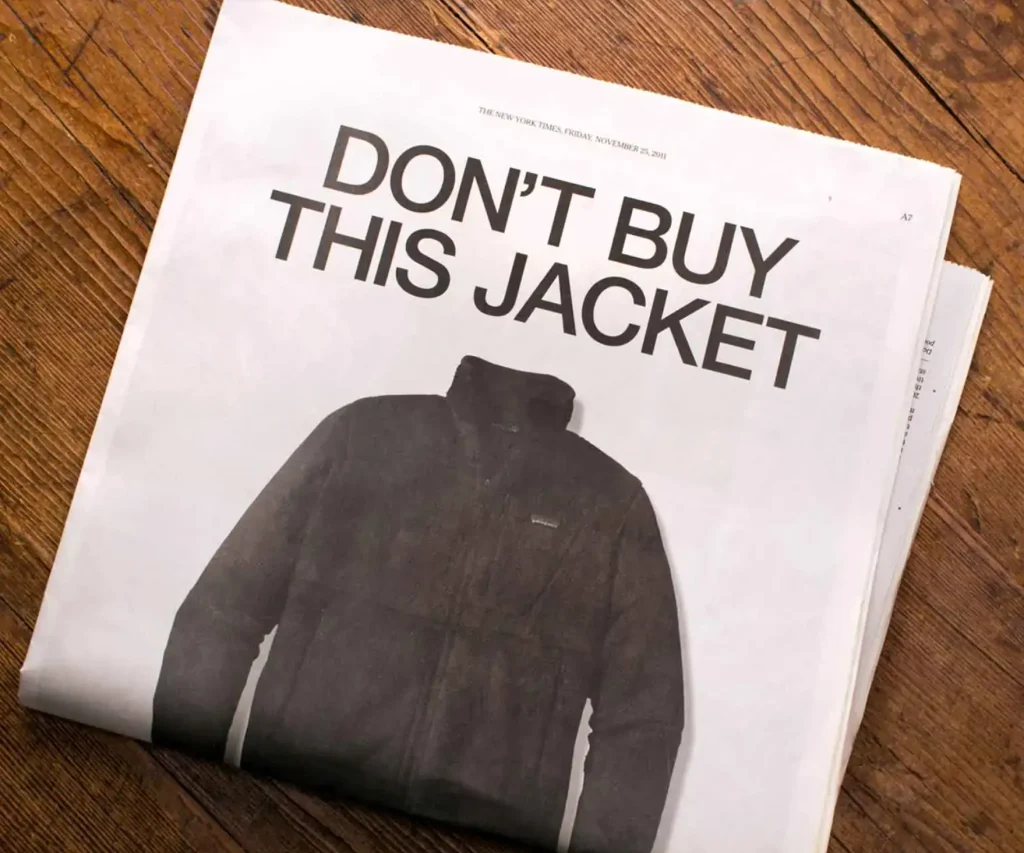
Outdoor brand Patagonia continues its “Don’t Buy This Jacket” positioning each Black Friday, as it actively discourages purchases unless customers genuinely need products.
Their anti-consumerism messaging promotes repairing, reusing, and reducing consumption instead of just buying new items. This counter-positioning generates substantial media coverage and social sharing.
Channel(s): Print ads, website, email, social media
Image source: patagonia.com
Why it works:
Authentic value alignment strengthens customer loyalty.
Contrarian position generates unpaid media attention.
Values-aligned customers increase patronage rather than reducing purchases.
The omnichannel takeaway:
Anti-sale campaigns require complete commitment across all customer touchpoints. If adopting this position, your homepage, emails, social content, and advertising must carry consistent messaging.
Instead of purchase urgency, create urgency around values-aligned alternatives.
Promote service offers such as: “Complimentary repairs this week only. Schedule before [countdown] ends.” This applies urgency to appropriate behaviors without contradicting anti-consumption values.
Your 5-step BFCM campaign checklist
Here’s how to apply these 20 examples to your 2025 Black Friday campaign.
Step 1: Start early (build your VIP list)
What to do: Begin list building 2-3 weeks before Black Friday. Give early access to subscribers who opt in ahead of time (like example 1 – Huda Beauty).
How Deadline Funnel helps: Set up a holiday promo campaign that shows a countdown to your VIP launch. Add the floating bar to your homepage and run ads to a VIP signup page.
When VIP access opens, each subscriber gets their own 48-hour deadline using an evergreen campaign. Their personal countdown follows them across email and your site. After it expires, they automatically see regular pricing.
Step 2: Segment your audience (send different messages to different groups)
What to do: Split your list by behavior, not demographics. Past purchases matter more than age.
Shinola (Example 14) analyzed three years of BFCM data to identify which products each segment purchased most, and achieved 48% higher revenue per recipient.
How Deadline Funnel helps: Assign different deadline lengths per segment. VIPs receive 72 hours, regular subscribers receive 48 hours, and new visitors receive 24 hours. Each person sees their pop-up widget on all devices.
Step 3: Synchronize your countdown timers
What to do: Display countdown timers in all channels showing identical remaining time (like Altitude sports, example 13). A customer who sees “8 hours left” in an email should see “7 hours 54 minutes” when they visit your site six minutes later.
How Deadline Funnel helps: Add the email timer to your emails. Add the floating bar to your site. Use email links in your buttons. When the deadline hits, people get redirected to an expired page.
Step 4: Maintain channel consistency
What to do: Your Instagram follower, email subscriber, and website visitor should see the same offer structure. Different discount amounts across channels create confusion and distrust.
Miracle Brand (Example 7) used “Better than their deals” positioning in email subject lines, Instagram posts, and website headers.
How Deadline Funnel helps: Configure one campaign that operates across email, website bars, and popups. All channels pull from the same deadline source, which prevents conflicting expiration times.
Step 5: Plan your full week strategy
What to do: Treat BFCM as a series of connected events (like Walmart in example 3), not one continuous sale. Each phase needs a distinct hook other than “sale still on.”
How Deadline Funnel helps: Configure all your deadlines in advance. Add abandoned cart campaigns to win back shoppers. Everything runs on its own. Each campaign operates without manual timer updates or page swaps.
The key: enforce your deadlines
You have 20 verified examples and a 5-step framework. The determining factor is deadline enforcement.
Customers ignore countdown timers that reset. They ignore “limited time” offers that continue indefinitely. They’ve learned to wait because most brands extend their “final hours” for three more days.
When your email displays “6 hours remaining” and your website displays “5 hours 58 minutes,” trust develops. When the timer expires and the offer actually ends with no “we extended it just for you” emails, urgency becomes legitimate.
Deadline Funnel tracks users on multiple devices, synchronizes countdowns in channels, and redirects expired offers.
Competitors will send seven emails in 24 hours. They’ll drop to 70% off by Sunday. You’ll convert more with your first deadline that sticks.