Summarize in:
TL;DR (Quick Answer)
A PLR digital product is content you buy the right to edit, rebrand, and sell as your own. The creator retains copyright and sells the same license to many buyers at once, which is why PLR is cheap but also why heavy customization isn’t optional.
Private label rights, PLR for short, describe a licensing arrangement where a content creator sells a digital product alongside a specific set of permissions.
The buyer can modify that product, brand it as their own, and often sell it to others. The creator keeps the underlying copyright and can sell that same license to many different buyers at once.
If you’ve been wondering what a PLR digital product actually is and whether it’s worth your time, this guide covers it from the ground up: how the licenses work, what product formats are most common, the real advantages and risks, how to customize effectively, where to sell, and what legal details to watch.
Key takeaways
- PLR licenses vary by product. There’s no universal standard, so the specific agreement you buy governs what you can and can’t do, not the PLR label.
- PLR is the most permissive of the common license tiers. It sits above Master Resell Rights and standard Resale Rights because it’s the only one that lets you edit the content and present it under your own name.
- Popular formats include e-books, Canva template packs, course curriculum frameworks, and article bundles. Each suits a different type of business.
- Publishing raw PLR verbatim won’t trigger a formal search engine penalty, but it gives search engines no reason to rank your copy over dozens of identical ones.
- Real customization means restructuring content, rewriting in your own voice, and replacing third-party visual assets. Swapping a cover and changing the title doesn’t count.
- Some PLR licenses cap resale volume or ban use in membership sites. Those limits become real constraints as your business scales, so read the license before buying.
How a PLR license actually works
Copyright law gives creators automatic, exclusive rights over their original work. When a PLR producer writes an e-book or designs a course, that content is protected by default.
A PLR license is the contract by which the creator grants a defined set of those rights to a buyer, typically the right to edit the content, attach a new author name or brand, and sell the finished result.
The creator retains the right to sell that same license to many buyers at once. This non-exclusive structure is what keeps PLR affordable. It also means dozens of people might own a license to the exact same source material, which has real implications for how you use it.
PLR licenses can range from highly permissive to fairly restrictive. At one end, buyers can edit the content, bundle it with other products, give it away, and resell it freely. At the other, the license may limit resale volume, prohibit certain distribution formats, or restrict giving the content away for free.
Reading the license before purchase is the only way to know what you’ve actually bought.
To make this concrete, imagine a health-and-wellness blogger who purchases a PLR guide on intermittent fasting.
She rewrites the introduction in her own voice, adds her own meal-prep photography and brand colors, and restructures the sections to match how she talks about food with her audience. She then sells the resulting guide as a lead magnet.
The underlying structure and research came from the PLR product; the brand, voice, and presentation are hers.
How PLR works
PLR vs. master resell rights vs. resale rights
PLR gets confused with Master Resell Rights (MRR) and standard Resale Rights (RR) often enough that it’s worth spelling out the differences. They look similar on the surface but differ in two ways: whether the buyer can edit the product, and whether the buyer’s customers can also resell it.
| License type | Can edit the content? | Can resell to customers? | Can customers resell further? |
| Private Label Rights (PLR) | Yes | Yes, in most cases | Depends on the specific license |
| Master Resell Rights (MRR) | Sometimes, but often no | Yes | Yes |
| Resale Rights (RR) | Rarely | Yes | No |
PLR is the most permissive tier. The buyer can modify the product, present it under their own name, and sell the result.
MRR allows resale and lets the buyer pass resale rights to their own customers, but typically locks the content so it can’t be altered. RR is the most restrictive; the buyer can sell to end customers, but those customers get a personal-use copy with no resale rights.
PLR is generally the better choice if you want to build a brand instead of simply redistributing existing products. The combination of editing rights and branding rights is what makes genuine differentiation possible.
MRR suits marketers who want a ready-made inventory item, and RR works when a seller needs a simple add-on product and has no interest in modifying or rebranding it.
Common types of PLR digital products
PLR comes in many formats, each suited to different business goals. Some work well as standalone products, while others are better for growing an email list or creating educational content.
- E-books and guides: Great as paid digital products or lead magnets. Their structured format also makes them relatively easy to edit, rebrand, and expand with your own expertise.
- Templates: Canva templates, social media graphics, planners, journals, and business documents are popular because they require less rewriting than text-heavy products. Updating the branding, fonts, colors, and imagery can quickly make them your own.
- Courses and curriculum: PLR course materials provide a framework of lessons, exercises, and objectives that coaches and educators can customize with their own methodology, examples, and teaching style.
- Articles and blog posts: Useful for jump-starting a content calendar, testing a new niche, or repurposing into newsletters, lead magnets, or social media content.
Tip: If you’d rather skip the customization process altogether, consider using done-for-you digital products instead. They can help you launch faster while still giving you room to build your own brand.
The real benefits of using PLR content
Benefits and limitations of PLR content
PLR has become popular because it saves both time and money, but those aren’t the only advantages.
Speed
Instead of starting with a blank page, you’re working from a structured draft that already has a logical flow. That gives you more time to improve the content, add your own expertise, and focus on marketing the finished product rather than creating every asset from scratch.
Cost
Commissioning original e-books, templates, courses, or article series can quickly become expensive, especially if you’re publishing regularly. PLR provides a much lower-cost starting point while still giving you the flexibility to rewrite, expand, and brand the content as your own.
More variety
PLR also makes it easier to explore new niches or product ideas. Rather than spending weeks creating a product from scratch, you can customize an existing resource, launch it, and see how your audience responds. If the topic performs well, you can continue investing in it. If it doesn’t, you’ve tested the idea without committing the same amount of time and money.
The biggest mistake is treating PLR as a finished product. The real value comes from using it as a starting point. The more you rewrite, restructure, and personalize the content, the more distinctive your final product becomes.
The genuine risks and limitations
PLR isn’t without its drawbacks. Most of the common pitfalls come from treating it as a finished product rather than a starting point. Knowing these risks makes it much easier to avoid them and get the most value from your purchase.
Market saturation
Market saturation is one of the biggest drawbacks of PLR. Popular products are often sold to hundreds of buyers, so publishing them with only minor changes means competing against everyone else using the same source material. In established niches like weight loss or digital marketing, experienced buyers may even recognize the original content.
The solution is investing enough time in customization to make the final product genuinely your own.
Duplicate content
Publishing PLR content word for word gives search engines little reason to rank your version over dozens of similar ones.
While there’s no confirmed “duplicate content penalty” for this, identical content rarely performs well in search results. Rewrite the structure, add your own insights, and update examples, images, and branding to create something that offers unique value. B
Before publishing, it’s also worth checking your finished version with a plagiarism tool such as Copyscape.
Brand dilution
If your products consistently feel generic or look similar to competing offers, customers are less likely to remember your brand or come back for future purchases. PLR works best as a foundation rather than a finished product.
The more you adapt the content to reflect your own expertise, voice, and visual identity, the more distinctive your business becomes.
How to customize PLR content so it actually reflects your brand
Many PLR buyers under-customize. They swap the cover, change the title, and upload the file. That level of modification merely creates a slightly repackaged version of something dozens of other people are already selling.
Customize your PLR content, step-by-step
Start with structural editing
Reorganize sections to match how you naturally explain a topic, cut content that doesn’t fit your audience, and add original sections where your own expertise applies.
A PLR course on email marketing might have a section on list hygiene that your audience doesn’t need, and no section on segmentation strategy that they definitely do. Restructuring at this level makes the product yours in substance, not just in name.
Voice editing
PLR is almost always written in a neutral, deliberately generic tone because it’s written for buyers across many different brands and styles. Rewriting in your actual tone is what makes a reader feel like they’re hearing from you rather than from a content generator.
You don’t need to rewrite every sentence. You need to read each paragraph and ask whether you’d actually say it this way.
Apply visual branding
Consistent colors, typography, and imagery that match your other materials. Canva makes this accessible even without a design background, and most PLR products now include editable source files for this purpose.
PLR as an add-on
One additional angle worth considering: PLR pieces can serve as connective tissue in a broader content strategy. A PLR e-book can fill a gap in your content calendar, be repurposed into an email sequence, or be combined with other PLR products to create a more comprehensive offering than any single pack provides.
Thinking about PLR as a component rather than a standalone product tends to produce more durable results.
Where and how to sell PLR products
There’s no single best place to sell PLR-based products. The right channel depends on whether you want full control over your brand, access to an existing marketplace, or a way to grow your audience.
Sell through your own website
Selling from a Shopify store or another ecommerce platform gives you complete control over branding, pricing, and customer relationships. You’re not competing alongside similar products on a marketplace, and you keep access to valuable customer data. The downside is that you’re responsible for attracting your own traffic through SEO, email marketing, social media, or paid advertising.
Sell on marketplaces
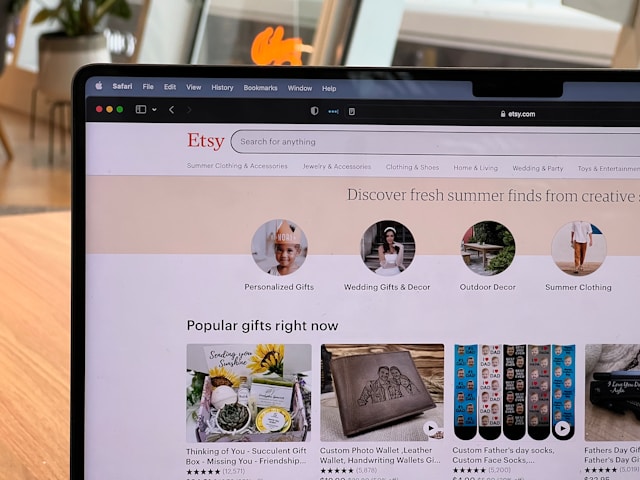
Marketplaces like Etsy make it easier to reach people already looking for digital downloads. The trade-off is increased competition, especially if multiple sellers are using the same PLR source material. Strong branding, thoughtful customization, and attractive product images become much more important in crowded categories.
License your own PLR
If your business creates PLR products rather than customizes them, dedicated marketplaces such as PLR.me can connect you with buyers specifically looking for source material. This approach suits businesses that generate content for other creators rather than selling directly to end customers.
Use PLR to grow your email list
Selling isn’t the only option. Many creators use a customized PLR ebook, workbook, or template as a lead magnet to grow their email list. Given away in exchange for an email address, a well-targeted resource can generate far more long-term value through future product launches than a low-priced standalone sale.
Tip: Looking for ideas beyond PLR? Read our guide to digital products to discover popular product types, pricing strategies, and ways to build a sustainable digital product business.
How should you price PLR products?
Pricing depends largely on how much value you’ve added. A lightly edited PLR product will generally compete on price, while a heavily customized product with original branding, examples, and bonus materials can justify a premium.
Instead of trying to sell the cheapest version, focus on creating something that offers a better experience than the original source material.
Legal considerations
License terms define everything. They determine whether you can claim authorship, whether resale is permitted, whether the product can be given away free, and whether it can be bundled with other offers.
A license labeled “PLR” doesn’t automatically grant all the permissions commonly associated with that term. The specific document governs, not the label.
Copyright in third-party assets is a less obvious issue. PLR products frequently include images, icons, or fonts sourced elsewhere. Purchasing the PLR license doesn’t override whatever licensing terms applied to those assets originally.
If the PLR creator used a stock image under a personal-use license and then sold you a commercial-use PLR package, you may have inherited a compliance problem. Replacing third-party visual assets during customization, rather than relying on whatever came in the package, is the cleaner approach.
Usage limitations include quantitative caps and channel restrictions that can become significant as a business grows. Licenses may also include restrictions, such as a maximum number of resales, limits on paid membership sites, or minimum pricing requirements.
Most PLR use is straightforward and well within the bounds of what licenses permit. The risks come mainly from buyers who assume all PLR is the same or skip reading the actual agreement.
How to evaluate PLR quality before you buy
Like going to a rummage sale, you’re going to have to dig through some junk to find something valuable. Keep these tips in mind while you’re hunting.
Content quality
Good PLR reads like a coherent first draft written by someone who knows the subject. The argument follows a logical sequence, the advice is specific enough to be actionable, and the prose doesn’t feel stitched together from unrelated pieces.
Warning signs include repetitive phrasing with no concrete insight, generic statements that could apply to any topic, and claims presented without supporting rationale. Look for sample pages before purchasing and read them critically.
Timeliness
PLR produced several years ago on fast-moving topics like AI tools, social media strategy, or crypto may have a structurally sound framework that’s factually out of date. Check publication dates and scan for statistics or platform references.
A PLR course mentioning a platform that no longer exists, or citing data from five years ago as current, needs more work than its price might suggest.
Vendor reputation
Established PLR sellers with documented reviews and a visible track record carry less risk than anonymous providers on content-mill aggregators. Practitioner communities on Reddit and niche Facebook groups often surface candid vendor recommendations based on direct experience.
Those conversations can be more reliable than the marketing copy on the seller’s own site.
Putting it together
PLR digital products lower the barrier to entry for content creation while preserving room for differentiation. But that differentiation is the actual work. PLR is starting material, not a finished product, and sellers who treat it as the latter end up competing in a crowded field with nothing distinctive to show for it.
Sustainable results depend on understanding the license you’ve purchased, selecting source material worth building on, and investing in customization that reflects genuine expertise and a consistent brand voice. As AI-generated content continues to lower the cost of producing raw material, the differentiator shifts further toward voice, credibility, and the specific value only you can add to what you’re selling.
If you’re building a PLR-based product to sell, the offer itself is only part of the equation. Getting buyers to act before they click away is where many digital sellers lose revenue they’ve already earned.
Deadline Funnel gives each subscriber a unique, personalized countdown that follows them across devices and pages, synced between your emails and sales page. No fake countdowns or hidden resets. Deadline Funnel keeps your deadlines consistent across emails, landing pages, and checkout so every subscriber sees the same offer.
Start your free trial today to start boosting your conversions.
FAQ
What’s the difference between PLR and MRR?
PLR (Private Label Rights) allows you to modify, rebrand, and sell the content as your own, depending on the license terms. MRR (Master Resell Rights) typically lets you resell the product to others but does not allow substantial modifications or rebranding. Always check the specific license, as rights can vary between products.
Can you make good money selling PLR products?
Yes, it’s possible. Because PLR products are usually inexpensive to purchase, they can offer high profit margins once you’ve invested time in rewriting, rebranding, and marketing them. The more value you add through customization, the more likely your product is to stand out from competing versions.